Why Pressure Varies in Apartment Buildings
In a multi-storey or multi-unit building, mains pressure is delivered at the base of the building and distributed upward through a shared riser. Ground-floor units typically receive the full mains pressure — which in some Melbourne streets can exceed 700kPa. Upper-floor units receive reduced pressure due to the height differential (roughly 10kPa per metre of height). This creates a situation where the same building can have dangerous over-pressure at the base and acceptable pressure at the top.
Buildings constructed under older standards may not have individual PLVs on each meter. In these cases, all units on the lower floors are exposed to whatever pressure the mains delivers — and when Melbourne Water adjusts supply pressure seasonally, the impact is felt directly inside the units.
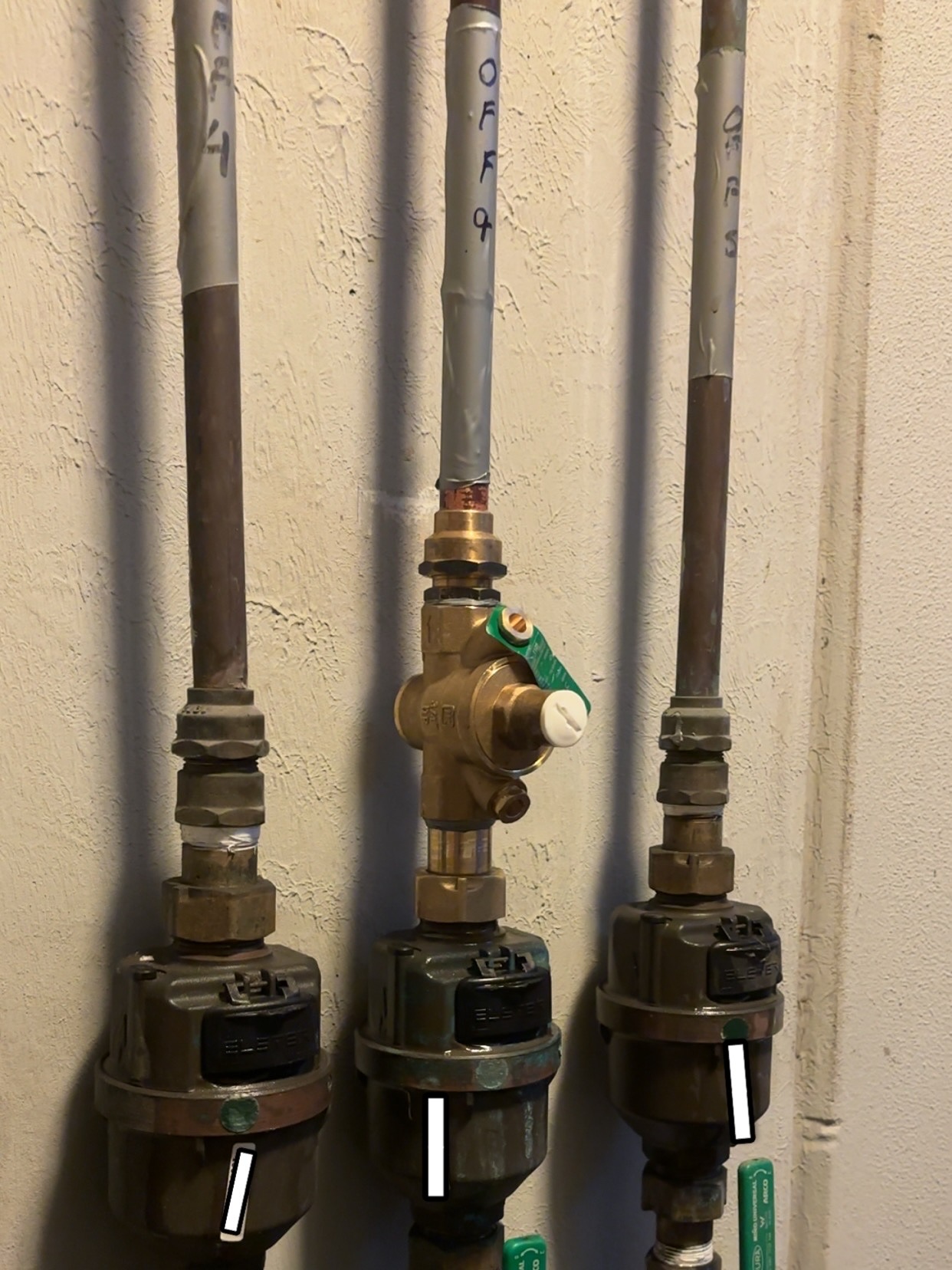
What This Photo Shows
The photo shows a bank of three individual water meters in a small Melbourne apartment building or villa complex. Each meter is labelled (OFF 4, OFF 9, OFF S — indicating unit or tenancy identifiers). The brass PLV installed on the middle meter's supply is clearly visible. This is a common scenario we encounter: an existing building where PLVs were not originally installed, and individual units are being retrofitted with their own pressure limiting valve as part of a maintenance or compliance program.
Where a building has multiple meters, each meter ideally has its own PLV set to 500kPa. Alternatively, a single PLV can be installed upstream of the meter bank to protect all units simultaneously — which is more cost-effective but only practical if the building's layout allows access to a single upstream supply point.
Who Is Responsible — Owner, Tenant, or Body Corporate?
This is the most common question we get on strata PLV jobs. The short answer under Victorian strata law:
- The body corporate is responsible for the common property plumbing — including any shared risers, the main meter bank, and supply infrastructure upstream of individual lot meters
- The lot owner is responsible for the plumbing within their individual lot, including any PLV fitted to their individual meter
- A tenant is generally not responsible for installing or maintaining PLVs — this falls to the owner or body corporate depending on where in the supply chain the valve sits
In practice, many PLV issues in Melbourne apartment buildings fall into a grey area at the meter bank — which is technically body corporate infrastructure but directly affects individual lots. We recommend body corporates treat the installation of PLVs at all meters as a preventative maintenance item, given the liability exposure from a burst flexible hose caused by unregulated high pressure in an individual unit.
AS/NZS 3500.1 requires that where mains pressure exceeds 500kPa at the property boundary, a pressure limiting valve must be installed. This applies to all residential properties including apartments and units. Buildings that pre-date this standard may not have compliant PLVs in place.
What Happens Without a PLV in an Apartment
The most serious risk from unregulated high pressure in an apartment is a burst flexible braided hose — the type used under kitchen sinks, behind toilets, and to washing machines. These hoses are rated to 1500kPa new, but degrade over time and are typically replaced every 5–10 years. A hose under sustained high pressure ages faster and can fail catastrophically, discharging at full mains pressure into the apartment. In a multi-storey building, this water floods down through every floor below — resulting in damage claims across multiple lots and a significant body corporate insurance event.
PLV installation at each meter is the single most effective preventative measure against this risk. The cost of installing PLVs across a bank of meters is a fraction of a single flood event's excess, let alone the damage costs.
Need PLVs for Your Apartment Building?
We work with body corporates, strata managers, and individual unit owners across Melbourne. Fixed-price per meter, minimal disruption to residents.