If you can smell gas at your property, do not attempt to find the leak yourself. Leave the premises, turn the gas off at the meter if safe to do so, and call 0434 542 446 or the gas emergency number on your gas bill.
A High Gas Bill Is Worth Investigating
Gas bills creep up for a lot of reasons. A new appliance, a particularly cold winter, changes in usage. But when the bill jumps significantly with no clear explanation, a gas leak is one of the first things to rule out. Gas can escape from a damaged pipe continuously, adding to your bill every hour of every day, and the leak may produce no smell at all depending on where in the line the damage has occurred.
This Epping homeowner had been watching their gas bill rise steadily over several billing cycles with no change in their usage habits. No smell, no obvious signs, just the bill. They called us to investigate.
Pressure Testing the Gas Line
The first step with any suspected gas leak is a pressure test. We isolate the gas line, connect a calibrated digital pressure gauge, pressurise the system to the test specification, and monitor the reading over time. If the pressure holds steady, the line is tight. If the reading drops, gas is escaping somewhere.
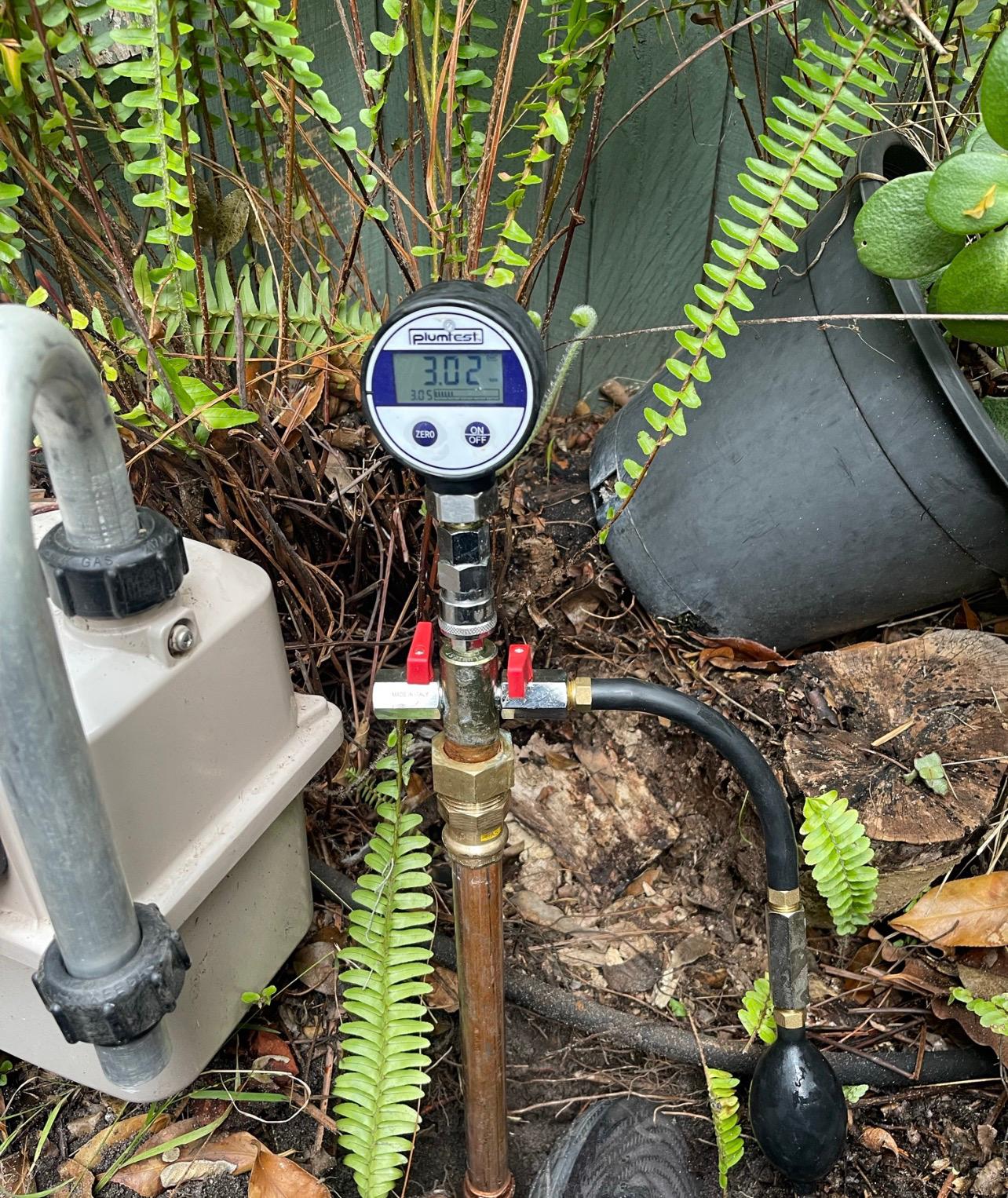
The gauge shown above is connected to a test point at the gas line. Reading 3.02 kPa at the time of the photo. A correctly sealed line would hold this pressure throughout the test period. On this job, the pressure dropped, which gave us a confirmed leak rather than a suspected one. From that point, the job moved from investigation to repair.
Finding the Damaged Copper Pipe
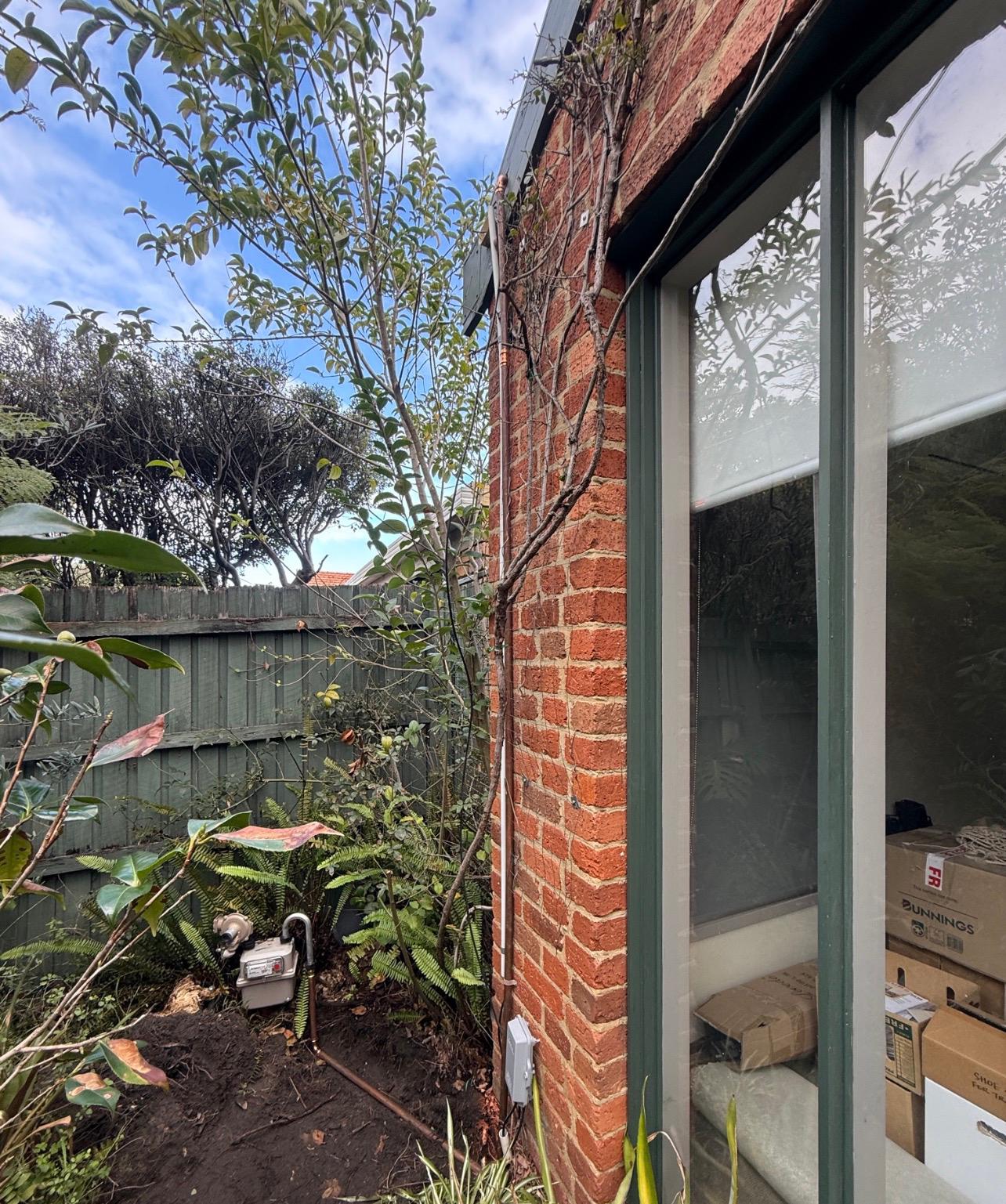
With a confirmed pressure drop, we systematically worked through the gas line to identify the location of the leak. Copper gas pipe can corrode over time, particularly where it runs externally and is exposed to moisture, soil contact, or in areas where it may have been disturbed by garden work or building modifications.
At this property, the affected section ran along the exterior wall, visible in the photo below, where years of exposure had caused the copper to deteriorate. This type of damage doesn't always produce an obvious smell because the escaping gas may disperse quickly in an outdoor or semi-outdoor environment.
Partial Gas Line Renewal
Once we had isolated the damaged section, the repair approach was a partial gas renewal. Replacing only the compromised section of copper pipe rather than the entire line. This is the correct approach when the rest of the line is in good condition. Replacing only what's damaged keeps the job targeted, reduces cost, and gets the gas back on as fast as possible.
The gas supply was turned off at the meter before any pipe work began. All appliances were confirmed off.
The corroded copper section was removed. Cut points were chosen to include a margin of sound pipe either side of the visible damage.
Replacement copper pipe was fitted and all joints were silver-soldered. No compression fittings. Silver solder is the correct method for gas line renewal.
With the new section in place, we repeated the full pressure test. The line held at the required pressure for the full test duration, no drop.
Gas was turned back on at the meter and all appliances were lit and confirmed working before we left the site. Certificate of Compliance issued.
Gas work in Victoria requires a Certificate of Compliance (Type B Appliances) to be issued on completion. All gas work by Lightning Response Plumbing is performed by licensed gas fitters and a Certificate of Compliance is provided for every gas job.
What a High Gas Bill Could Mean
- Gas leak in the line Escaping gas is metered even though it never reaches an appliance. A pressure test is the definitive way to rule this out.
- Inefficient appliance Older hot water systems, heaters, and cooktops burn significantly more gas than modern equivalents. If your appliances are over 10 years old, they may be costing more to run than they should.
- Continuous pilot light Some older heaters run a standing pilot flame 24/7. This adds to the bill year-round, not just when the heater is in use.
- Change in tariff If the usage is unchanged but the bill is higher, it may be a billing issue rather than a gas issue. Worth checking with your energy retailer.
If you've checked all of these and the bill is still unexplained, a pressure test is the only way to confirm whether the gas line itself is tight.