
Pooling Water Is a Drainage Problem, Not a Weather Problem
Almost every storm water call-out starts with the same description: it only happens when it rains hard, and it's been getting worse. Because the symptom appears with the weather, it's easy to write off as bad luck with a flat block. It usually isn't. A storm water system that's working carries roof and surface water away from the building and out to the discharge point, and it does that whether the rain is light or heavy. When water starts sitting on the surface instead, something in that path has stopped carrying flow.
On this Lalor job the owner had noticed the pooling building up over a couple of seasons, and had started seeing damp along the base of a wall. That second symptom is the one worth paying attention to. It's the difference between a soggy lawn and water working against the structure.
What the CCTV Inspection Found
We put the camera down the storm water line before quoting anything. That order matters: clearing a drain and repairing a drain are two very different jobs at two very different prices, and you can't tell which one you need from the surface.
The footage showed a section of the line where the pipe wall had cracked and partially given way, with surrounding soil visible inside the pipe. Once a pipe fails like that, water escaping through the break saturates the ground around it instead of continuing to the discharge point, and the wet ground then makes the surrounding soil less stable, which tends to make the break worse over time. That's the pattern that turns a small crack into a collapsed line.
A wet patch in the middle of a lawn is an annoyance. Water pooling against the house is different. The clay soils common through Melbourne's north swell when wet and shrink when they dry, and repeated cycles of that movement are a known contributor to slab and wall cracking. If you can see water sitting against the building after rain, it's worth having the storm water line looked at rather than waiting to see if it settles down.
How a Storm Water Repair Is Done
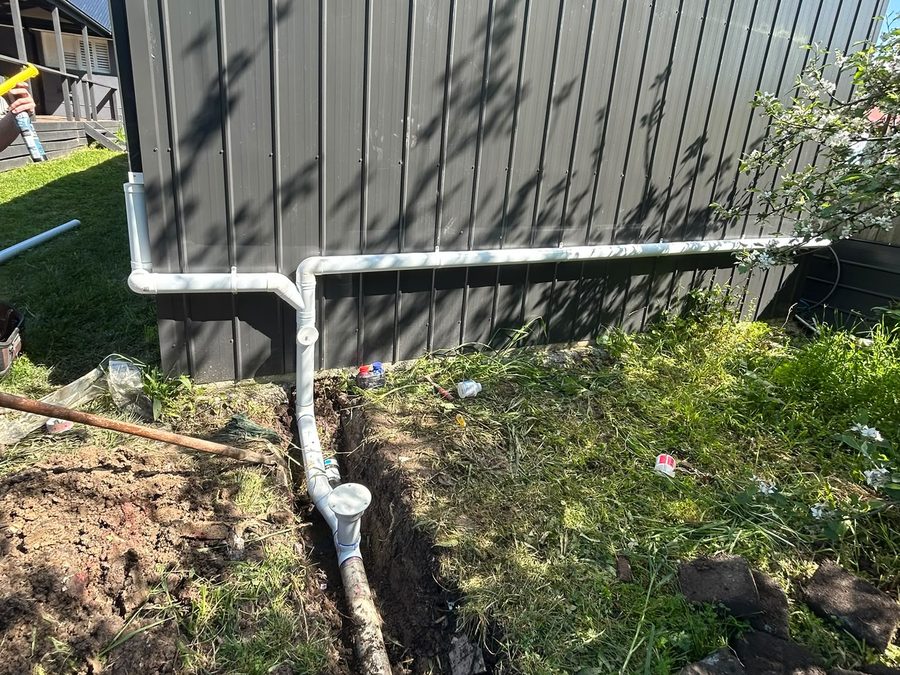
Once the camera has located the fault, the position is marked at the surface so the excavation is limited to the damaged length rather than the whole run. The broken section is dug out, the sound pipe either side is cut back to clean ends, and a new length is installed and joined to the existing line. Set to the correct fall so water actually runs rather than sitting in a low spot.
Before backfilling, the line gets tested and the camera goes back down to confirm the repair is sound and there's nothing else further along the run worth knowing about. The trench is then backfilled and compacted, and the surface reinstated. Doing the second camera run before the trench closes is the step that stops a return visit.
Signs Your Storm Water Line Needs Attention
A patch that holds water long after the rain has stopped, in the same place every time, usually sits directly over a fault in the line. Surface water should be gone within a short time of the rain easing.
Damp along the base of a wall, or a wet strip that follows the slab edge, means water is being held against the building instead of carried away. This is the symptom worth acting on quickly.
If a surface grate backs up and spills during heavy rain, or water surges out at the base of a downpipe, the line downstream isn't taking the flow, either restricted or broken.
Ground that has dropped slightly, or feels soft underfoot along the run of the drain, can indicate soil washing into a broken pipe below. It often appears before any water shows on the surface.
Lalor's water and sewer services are managed by Yarra Valley Water, and the suburb sits within the City of Whittlesea. Storm water pipework inside your property boundary is the owner's responsibility, up to the legal point of discharge. The council-designated point where your system connects to the public one. Anything past that point isn't yours to fix. We'll confirm which side of that line a fault sits on before quoting.
What We Did on This Job
- Walked the property after rain to map where water was collecting and where it should have been running
- CCTV inspection of the storm water line to find the cause before quoting any work
- Located and marked the fault at the surface so excavation stayed limited to the damaged length
- Excavated and replaced the cracked and collapsed section, cutting back to sound pipe either side
- Reset the new length to correct fall so the line drains rather than holding water
- Second camera run and flow test before backfilling to confirm the repair and check the rest of the run
- Backfilled, compacted and reinstated the surface